
Custom software
Custom Software Development: Process, Benefits and Tradeoffs
Understand when custom software makes sense, how delivery works, and what to plan for across integrations, security, ownership and ongoing support.
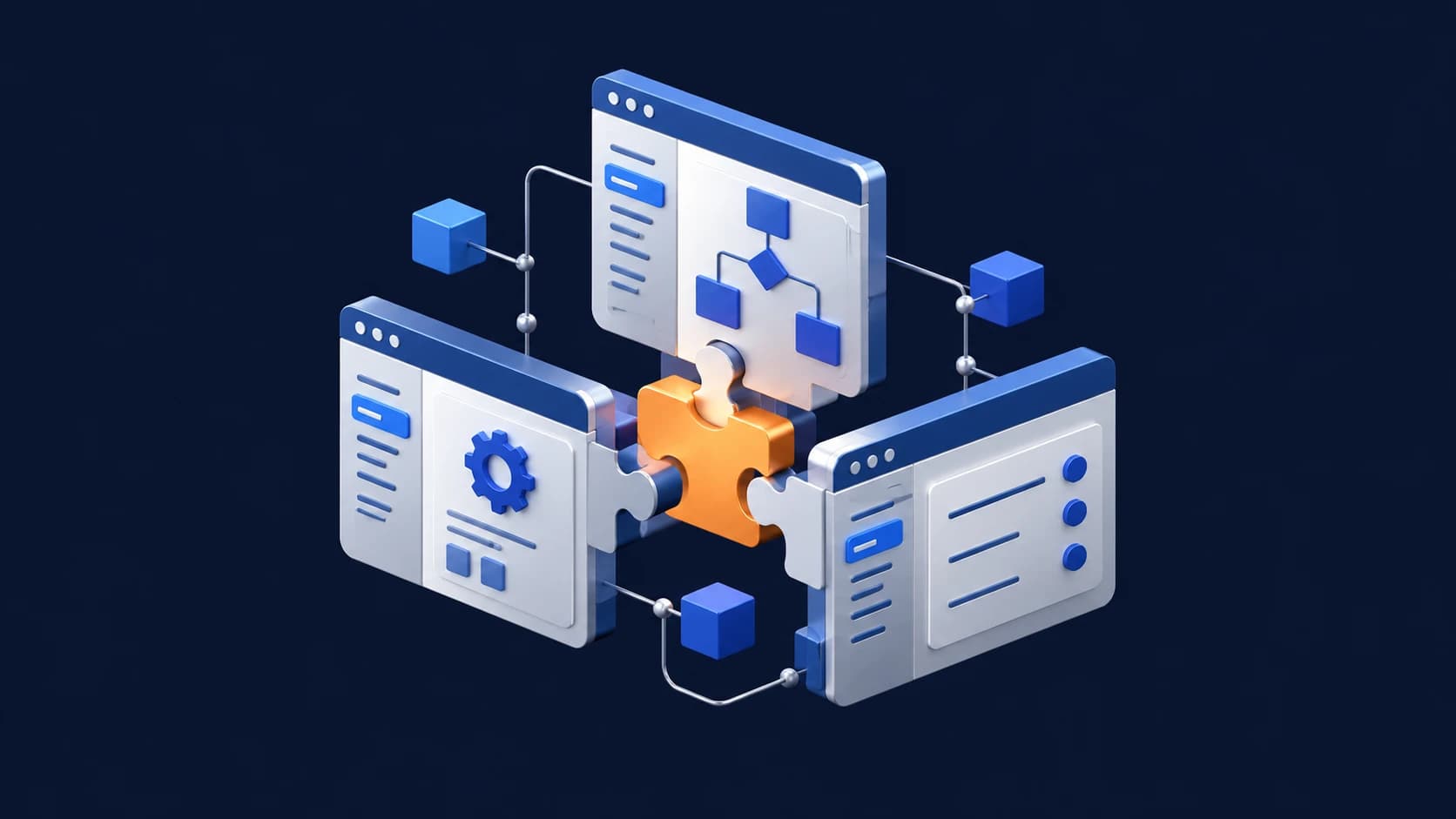
Custom software development is worth considering when an important business workflow cannot be supported adequately by an existing product or a practical configuration change. Start with the work people need to complete, the systems they already use and the constraints the solution must respect.
A custom application may combine existing platforms, reusable components and new code. It does not have to be built entirely from scratch.
When a custom application can help
Reasons to investigate custom development include a customer journey spanning several systems, an internal process dependent on repeated data entry, or a specialist workflow that packaged tools do not handle well.
These are reasons to assess the options, rather than proof that custom development is the best choice. Sometimes configuring an existing platform or improving an integration is enough.
What delivery should cover
- Understand the workflow. Identify users, decisions, business rules and current difficulties. Agree how a useful result will be assessed.
- Define the solution. Review the user experience, architecture, integrations and data requirements. Make assumptions and exclusions visible.
- Build in manageable increments. Deliver a focused part of the workflow, review it with users and adjust priorities using what the team learns.
- Verify the behavior. Test relevant journeys, permissions, integrations, performance requirements and recovery paths.
- Prepare for operation. Agree deployment responsibilities, monitoring, maintenance, incident handling and future changes.
Benefits depend on implementation
Custom development gives teams more influence over workflow design and technical choices. This can support relevant interfaces and closer integration with existing systems. It does not automatically make software secure, scalable or inexpensive to maintain.
For example, an internal request portal might bring submission, review and status tracking into one journey. This is an illustrative use case, not a claim about a completed client project. Its value should be assessed against the current process.
Plan beyond the first release
Include hosting, third-party services, dependency updates, monitoring and support in the budget. Confirm access to source code, documentation and deployment environments in the contract; ownership is not an automatic consequence of commissioning custom work.
A useful next step is a bounded discovery exercise comparing configuration, integration and custom development before committing to delivery.