
Digital transformation
Digital Transformation: When Custom Software Adds Value
Start with a business workflow, assess existing platforms and integrations, and use custom software where it addresses a clear gap with measurable outcomes.
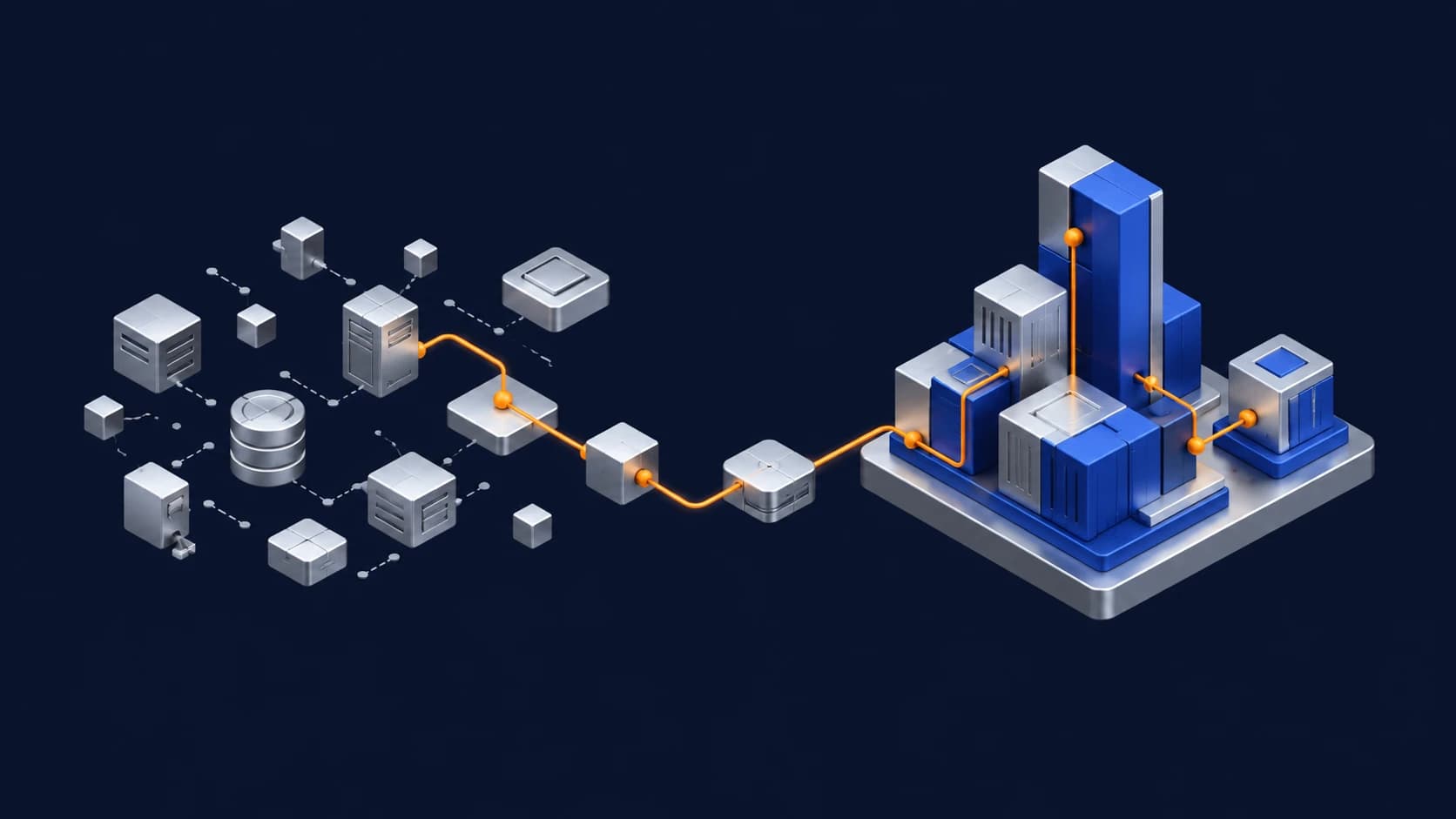
Digital transformation should begin with a business problem: repeated data entry, slow approvals or an incomplete view of operational work. Replacing a system or adding custom software is a possible intervention, not the objective itself.
The aim is to improve how people, information and systems work together. Sometimes this calls for custom development. A configuration change, integration or revised operating process may also be sufficient.
Define the problem before the technology
Map a workflow from its first input to its final decision or output. Identify people, records, systems and exceptions that interrupt progress.
Choose a baseline reflecting the problem, such as processing time, repeated entries or requests requiring manual correction. Define the measures and collect evidence before assuming improvements.
Assess existing options
Check whether current platforms already support the required work. Compare configuration, integration and targeted customization with replacing a system.
A packaged product may suit a common function. A distinctive journey across systems may justify custom work around existing tools. Make that boundary explicit.
Test a bounded pilot
Consider a hypothetical approval process moving between email and an operational system. A pilot might introduce a focused submission and review journey while retaining the current system of record.
Test access, data exchange, exceptions and adoption before deciding whether to extend it. This example illustrates an evaluation method; it is not a published client result.
Plan adoption and ownership
A working integration is only part of the change. Teams need responsibilities, usable interfaces, training and a way to handle non-standard cases.
Document who owns the product, data, support and future changes. Confirm contractual access and ownership rather than assuming bespoke software provides unrestricted control over every component.
Expand using evidence
Compare the pilot with the baseline. Review what improved, what created work and whether operating costs are acceptable. Use those findings to choose the next increment.
AI, cloud migration and product redesign may support the wider program when they address an identified need. Do not add them merely to make a transformation appear more ambitious.
Explore technology consulting and custom application delivery.