
Security & Engineering
Software Supply Chain Security: Risks and Practical Controls
Review dependency, repository and build-system risks, then use a practical checklist to improve component visibility, access controls and release integrity.
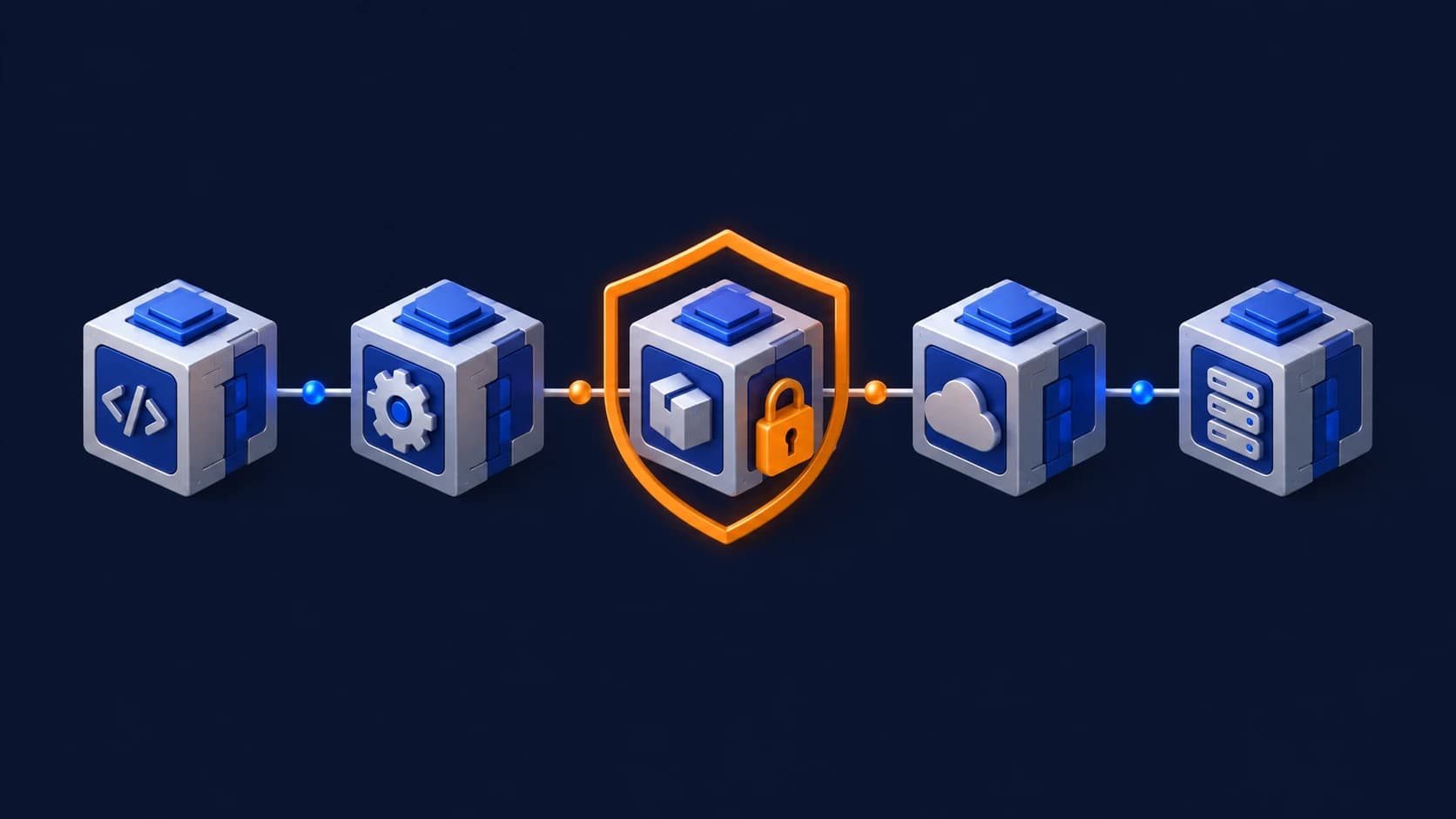
An application depends on more than its own source code. Packages, repositories, developer accounts, build tools and deployment systems all contribute to what reaches users. Software supply-chain security addresses risks across those relationships.
No single scanner proves a release is secure. Choose controls that match the application’s exposure, its delivery process and the impact of a compromised release.
Risks to assess
- Vulnerable dependencies: A component may contain a weakness relevant to how the application uses it.
- Malicious packages: Misleading names, compromised publishers or unexpected sources may introduce unwanted code.
- Compromised access: Stolen credentials or broad permissions can affect repositories and delivery systems.
- Build or release tampering: Changes to delivery systems or artifacts can affect software beyond reviewed source changes.
Avoid ranking a threat as universally the most common without a suitable dataset and defined scope.
A practical control baseline
- Track components. Record dependency versions and sources; use a software bill of materials where it supports release and response work. An inventory improves visibility but does not prove security. CISA SBOM resources
- Review dependency changes. Investigate new packages, updates and unexpected source changes.
- Protect repositories. Apply appropriate access controls and review requirements; remove access when no longer needed.
- Limit build privileges. Protect automated-job credentials and separate delivery responsibilities.
- Assess findings. Investigate relevant vulnerabilities, assign remediation ownership and record exceptions rather than relying only on scan counts.
- Protect release integrity. Review artifact production, storage and promotion; select verification mechanisms appropriate to the environment.
- Prepare a response. Know how to identify affected releases, replace or disable a component and communicate with the relevant owners.
Security practices belong across development and operation. NIST’s Secure Software Development Framework provides a reference for incorporating them into the development lifecycle. NIST SSDF
Turn the checklist into owned work
Assign an owner, verification method and review frequency to selected controls. A small team might start with repository access and dependency visibility, then address build and release gaps.
Review evidence such as unresolved findings, affected releases and investigation time. Do not claim that a framework, tool or component inventory automatically makes an application compliant or breach-proof.
Discuss your application delivery and cloud infrastructure requirements.